Research
Our research approach stands at the intersection between computational chemistry and biophysics. We combine advanced molecular modeling studies with experimental validation to tackle global health challenges, with a primary focus on Antimicrobial Resistance (AMR) and cancer. By integrating structure-based drug design (SBDD) with biophysical assays, we aim to elucidate molecular mechanisms at the atomic level and design novel candidate therapeutics.
Antimicrobial Resistance (AMR)
Antimicrobial resistance is one of the most urgent threats to global health. Our lab employs a multidisciplinary approach to identify novel targets and mechanisms to overcome resistance in critical pathogens (e.g., ESKAPE pathogens).
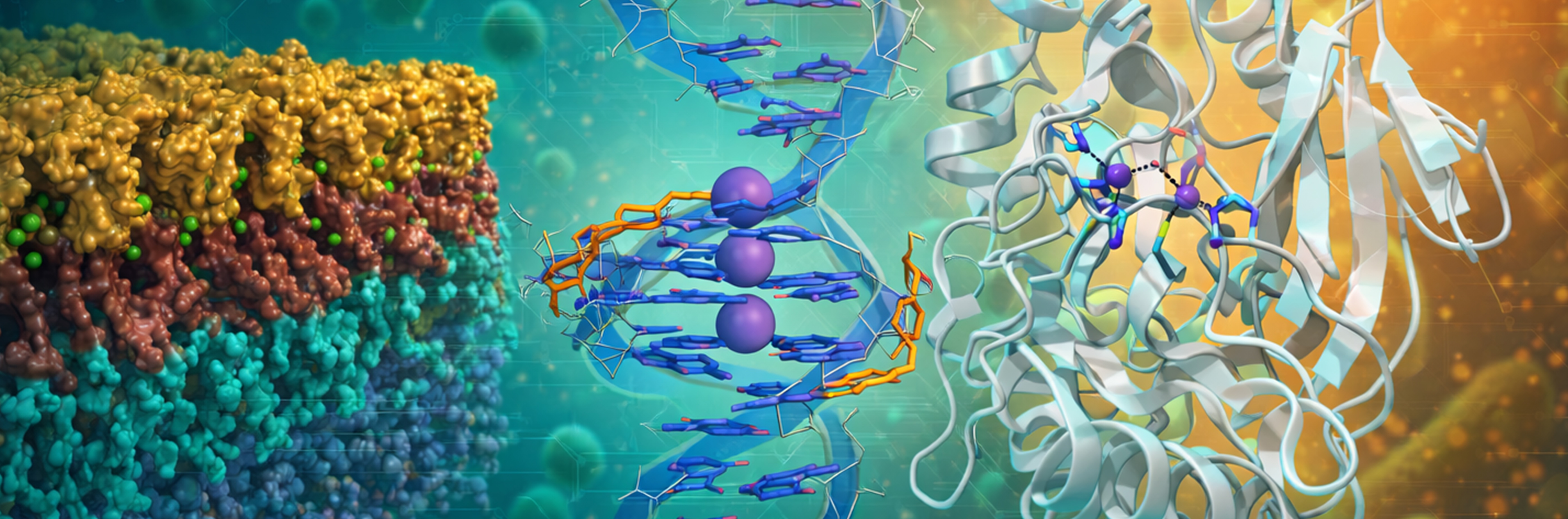
| Bacterial Membranes | G-Quadruplexes | Proteins |
Understanding drug permeation to bacterial membranes is crucial for the development of antibacterial agents. We perform extended MD simulations on complex bacterial membrane models to predict the permeability and interaction of small molecules with the lipid bilayer. | We are pioneering the exploration of bacterial G4s as innovative therapeutic targets, thanks to their consolidated role in the regulation of bacterial genes involved in virulence and drug resistance. | We study enzymes responsible for antibiotic resistance, such as metallo-beta-lactamases and other essential bacterial proteins. Our goal is to design and optimize small molecule inhibitors that can restore the efficacy of existing antibiotics or act as standalone therapeutic agents. |
Anticancer Drug Discovery
Our anticancer research focuses on targeted therapies that interfere with specific signaling pathways and/or enzymes involved in metabolic adaptations of cancer cells.
Hedgehog (Hh) Signaling Pathway: Aberrant activation of the Hh pathway is a driver in many cancers. We focus on targeting key components of this pathway, including the Smoothened receptor (Smo) and especially downstream effectors like Gli1. We utilize structure-based design to develop inhibitors that can block this signaling cascade. Particular attention is given to the use of natural compounds as a source of bioactive leads.
Targeting Cancer Metabolism & Microenvironment:
- ALDHs (Aldehyde Dehydrogenases) are often markers of cancer stem cells (CSCs) and contribute to chemotherapy resistance.
- CAs (Carbonic Anhydrases) are involved in pH regulation and adaptation to hypoxia in tumors.